Andrew J. Webber, Mark Windsor, Thomas Düllo, William Freeman, Juliane Rebentisch, Natalie Dederichs, Johanna Kirschbauer, John White, Marie-Louise James, Konstantin Haensch, Alexander Kluge, Matthias Planitzer, Christian Drobe, Christoph Borbach, Jan Distelmeyer, Clemens von Wedemeyer, Irina Simova, Olga Poznansky, John David Rhodes
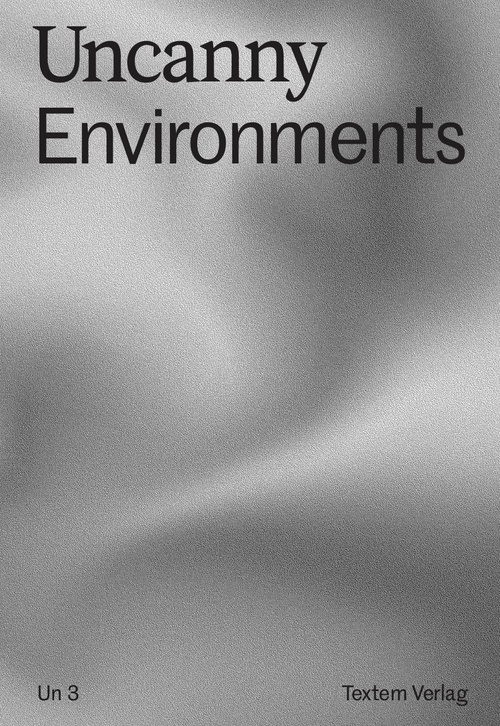
When routines enter states of uncertainty and familiar surroundings begin to fracture, the place we call “home” shifts toward the un-homely. The uncanny is no longer confined to a marginal aesthetic or affect; it increasingly functions as an everyday atmosphere and as a diagnostic category for contemporary transformations. Uncanny Environments traces this development through historical, present, and speculative topologies across everyday culture, literature, geopolitics, media, ecology, and infrastructural systems. Ranging from haunted houses and urban eeriness to biomimetic entanglements, war press centers, proximity sensing, AI operativity, and contemporary image politics, the volume approaches the “Un” as an analytic operator: a minimal negation that reconfigures boundaries and opens a speculative field of worlds and Unworlds—Unwelten. Positioned simultaneously as a seismograph of crisis and a map of potentialities, Uncanny Environments invites readers to navigate the present as a composite terrain—combining genealogy, theoretical excavation, and field oriented inquiry into current forms of discontent.
Andrew J. Webber, Mark Windsor, Thomas Düllo, William Freeman, Juliane Rebentisch, Natalie Dederichs, Johanna Kirschbauer, John White, Marie-Louise James, Konstantin Haensch, Alexander Kluge, Matthias Planitzer, Christian Drobe, Christoph Borbach, Jan Distelmeyer, Clemens von Wedemeyer, Irina Simova, Olga Poznansky, John David Rhodes
Hg. Nora Sdun, Gustav Mechlenburg
332 Seiten
25,00 Euro
Sprache: Englisch
Broschur
Maße: 155 mm x 225 mm
ISBN: 978-3-86485-362-3
Hamburg 2026